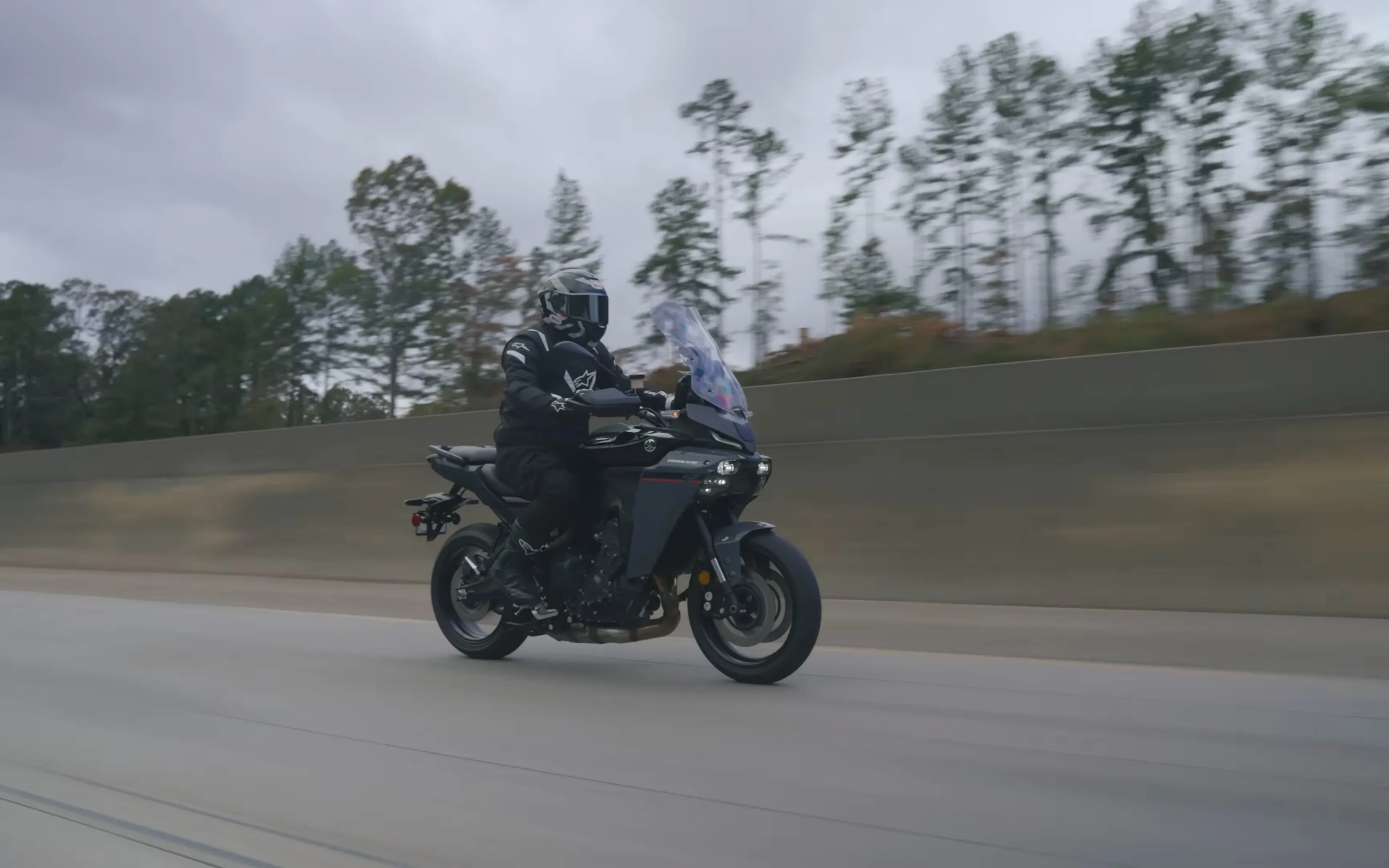
2025 Yamaha Tracer 9
Yamaha's sport-tourer stripped back to a base-model price. You lose a few toys, keep the championship-winning engine.
The Good
- CP3 Triple is the same engine winning championships under the R9. In a bike that tours
- Light steering despite 483 lb wet; the handlebar balance is shockingly good
- 7" TFT dashboard is Yamaha's best dash on any bike they sell
The Bad
- Stock suspension is too firm for sport-touring duty. Needs dialing
- America lost the GT Plus trim. No radar cruise, no stock quickshifter, no heated grips
- No remote preload adjuster, which is baffling on a bike built to take luggage + passengers
America Got the Base Model This Year
Yamaha had a plan for the Tracer 9 GT+ in North America. It was a fully-loaded sport-tourer with radar cruise, fancier suspension, heated grips, and a stock quickshifter. Americans didn't buy enough of them. So for 2025, Yamaha deleted the "GT+" and gave us the base Tracer 9: same engine, same chassis, $4,000 cheaper at $12,599.
Chase's summary of the trade: "Realistically, most of y'all aren't going to be changing your suspension up, so that's not that big of a deal. I wish it came with a quickshifter. This bike feels too sporty to not have a quickshifter. And then on a cooler day, I would like to have heated grips, but I can buy those if I wanted to." You lose the conveniences. You keep the engine. The math works if you were never going to use half the GT+'s features anyway.
Performance highlights
890cc CP3 triple, 117 horsepower, 69 lb-ft of torque, 483 lb wet. This is the same engine that Yamaha dropped into the R9. The bike currently winning middleweight supersport championships. In a sport-tourer body. Think about that.
Throttle response scores an 8. In Sport mode, the CP3 wakes up and the Tracer stops feeling like a tourer. "In sport mode, this bike feels like an MT-09." The 40-80 roll-on was so aggressive Chase had to downshift into first because the front wheel came up in second. On a 483-lb sport-tourer. That's not supposed to happen.
Agility is a surprising 8. On paper, 483 lb + a 33.3" seat height reads lethargic. In motion, the steering is "crazy light", Chase's direct word, and the handlebar leverage makes lane changes feel weightless. Yamaha's geometry choices here are doing real work.
Acceleration (8) is the CP3's mid-range delivery at its most approachable. Torquey down low, pulls cleanly up top, no flat spots. The gearing is tall, "don't be short-shifting this thing", but the engine has the grunt to carry the taller ratios.
Brakes rate a 7. Totally adequate for tour and commute pace, not a performance standout. If you're going to ride this bike sport-aggressive in the canyons (which the engine invites you to do), expect to lean harder on them than they'll love.
Suspension is the 5 and it's the one real critique. KYB hardware, good stuff, but tuned too firm for a sport-tourer. Chase on a real road: "I'm getting a lot of vibration from little, you know, little things in the road. If I was riding for a really long time, that would be like that gravelly stuff." And the missing remote preload adjuster is borderline a design oversight on a bike explicitly built for luggage + passenger combos.
Closer Look
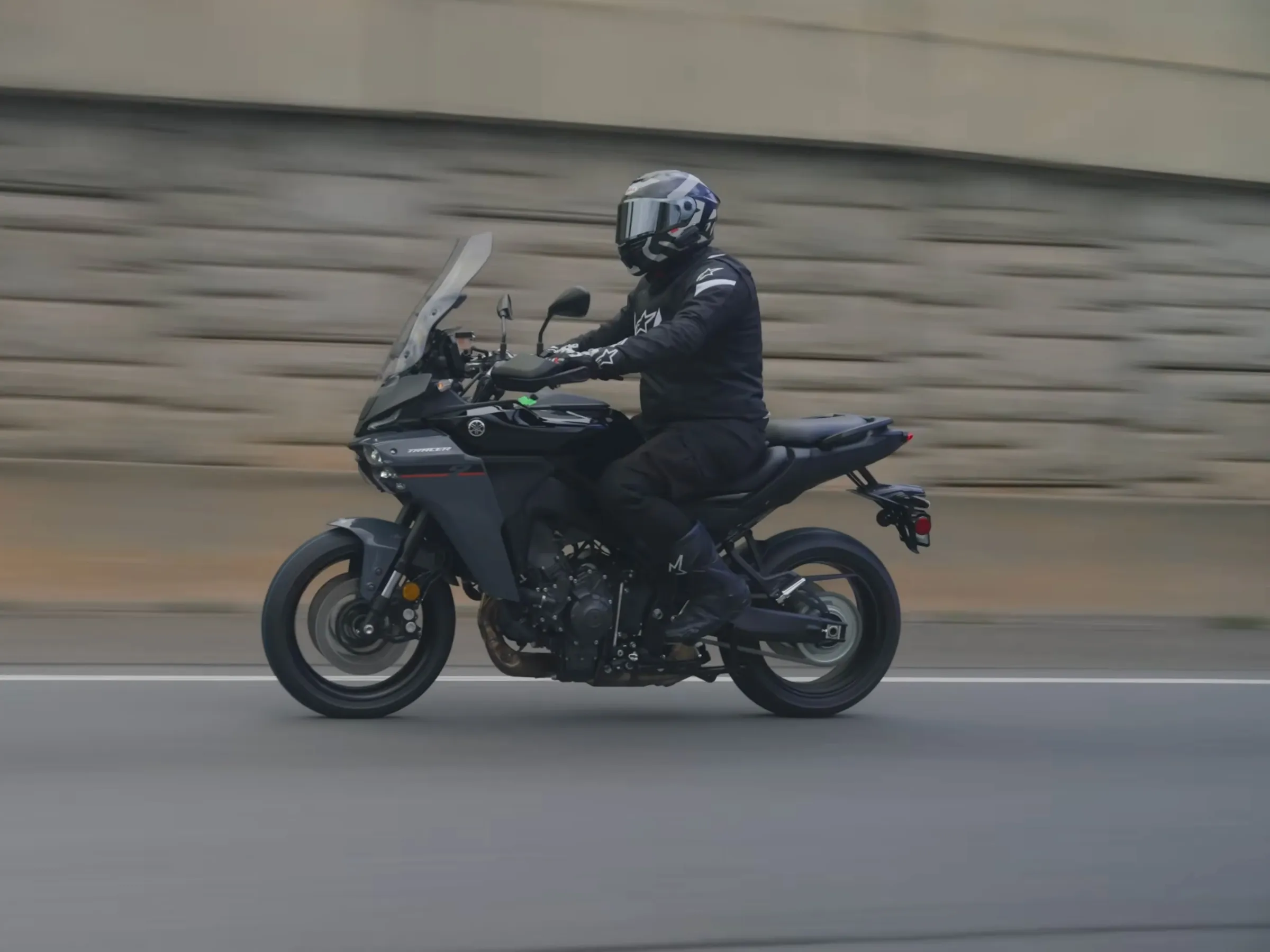
Swipe to explore.
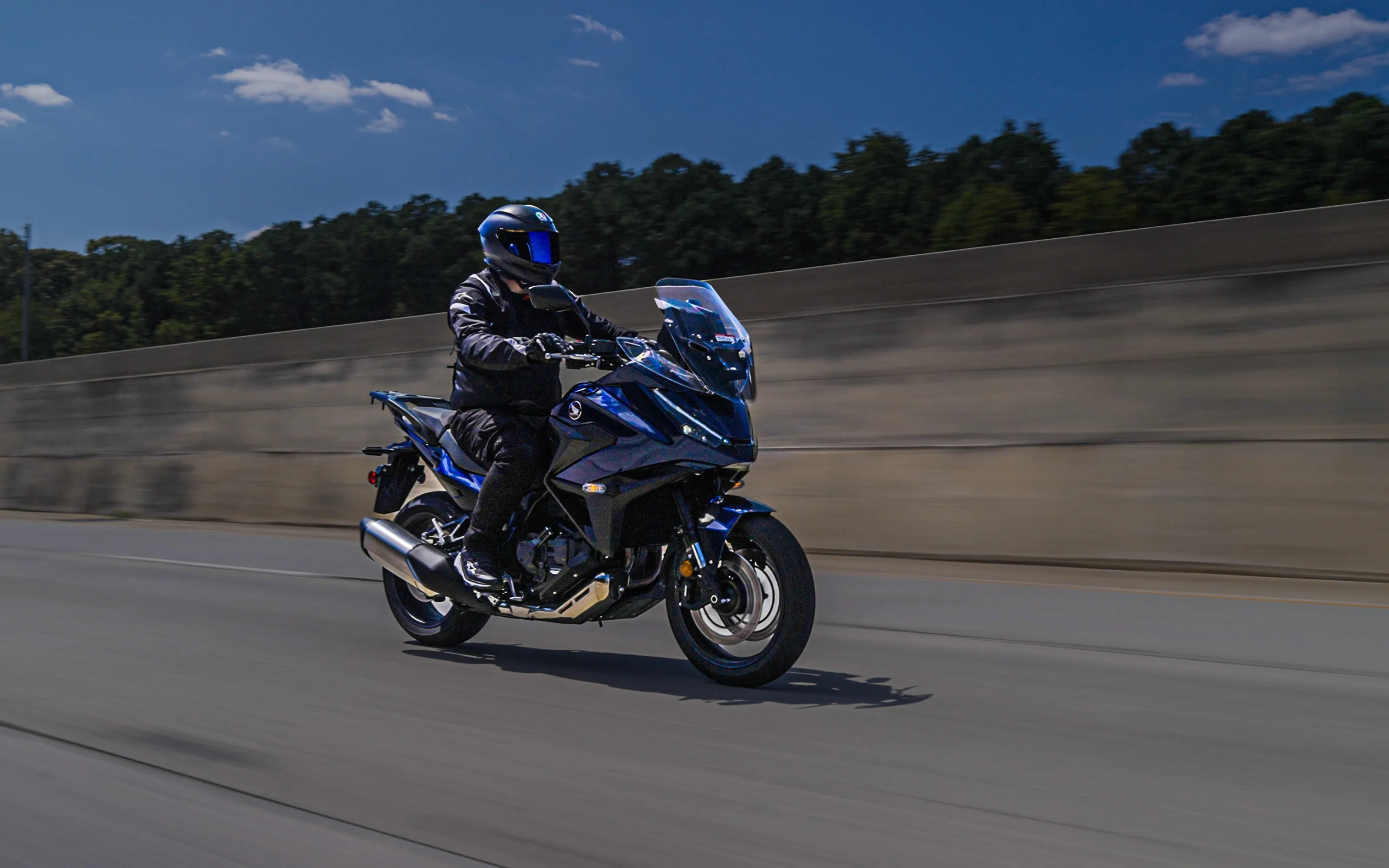
In sport mode, this bike feels like an MT-09. It's Sport Touring on the Tracer.
Rider experience & tech
Comfort is 7. The seat tapers in at the front, so flat-footing is easy despite the 33.3" height, and widens at the rear for all-day support. The peg placement is the one ergonomic miss: "right where my leg wants to go when it comes down is where my foot peg is." Same gripe Chase had on the MT-09.
The windscreen adjusts with a single tool-less press. Height-wise at 5'10" it hits the top of the helmet rather than cleanly over. Chase wants "like that much more" of vertical range. Not a dealbreaker; worth knowing if you're tall.
Tech lands at 8 and this is where Yamaha's recent dash upgrades pay off. The 7-inch TFT is the best dashboard Yamaha puts on any bike, sharp, responsive, four configurable themes with a track-biased tach animation that's genuinely fun to watch at speed. Cruise control works, forward-rotate cancels it. YRC (Yamaha Ride Control) lets you customize every aid individually. The one nit: the glass is too reflective, a matte finish would help in bright conditions.
Ease of use is 8. Easy bike to live with. Low-ish seat for the class, balanced chassis at a standstill, light clutch, clear menus, handguards standard (which matter in cold weather). A first-time sport-tourer buyer could get comfortable on this bike in a day.
Versatility is 7. Commute: excellent. Canyon sport ride: excellent once you adjust the suspension. Long-distance tour: fine without luggage, rougher with it until you sort the rear preload. Grocery run: overkill but fun.
Fun-for-the-money is 6. $12,599 gets you the CP3 engine, the best Yamaha dash, cruise control, adjustable levers, and a chassis that handles way better than a sport-tourer has any right to. Budget another ~$800 if you want to add a quickshifter and heated grips. That's the realistic out-the-door cost to match what the old GT+ included stock. Even then, you're under the GT+'s old MSRP.
The Chase Score & final thoughts
With a Chase Score of 72/100, Good Tier, the Tracer 9 is a bike that deserves more attention than the American market gives it. 36 ride points + 36 usability points = a genuinely versatile tourer hiding a sport bike underneath.
Buy it if you want one bike that does commute, canyon day, and a multi-day trip, and you're willing to spend a weekend dialing the suspension and adding a quickshifter. Skip it if you need the full GT+ feature set out of the box. That's not a bike you can buy new in the US anymore. Chase's honest take: "This bike feels like an MT-09 in sport mode." That's not a small thing to say about a sport-tourer. It's the reason this bike is good. It's also the reason it deserves more buyers.
The Chase Score Breakdown
Technical Specs
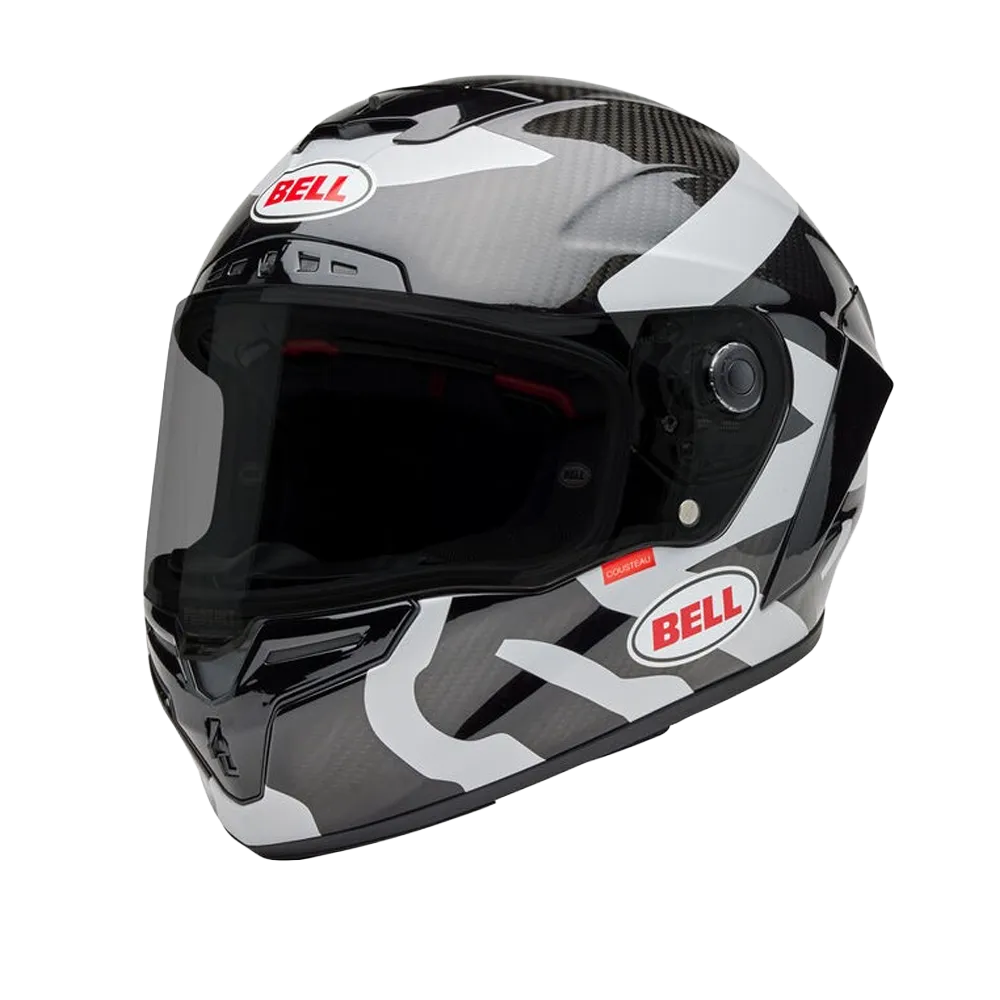
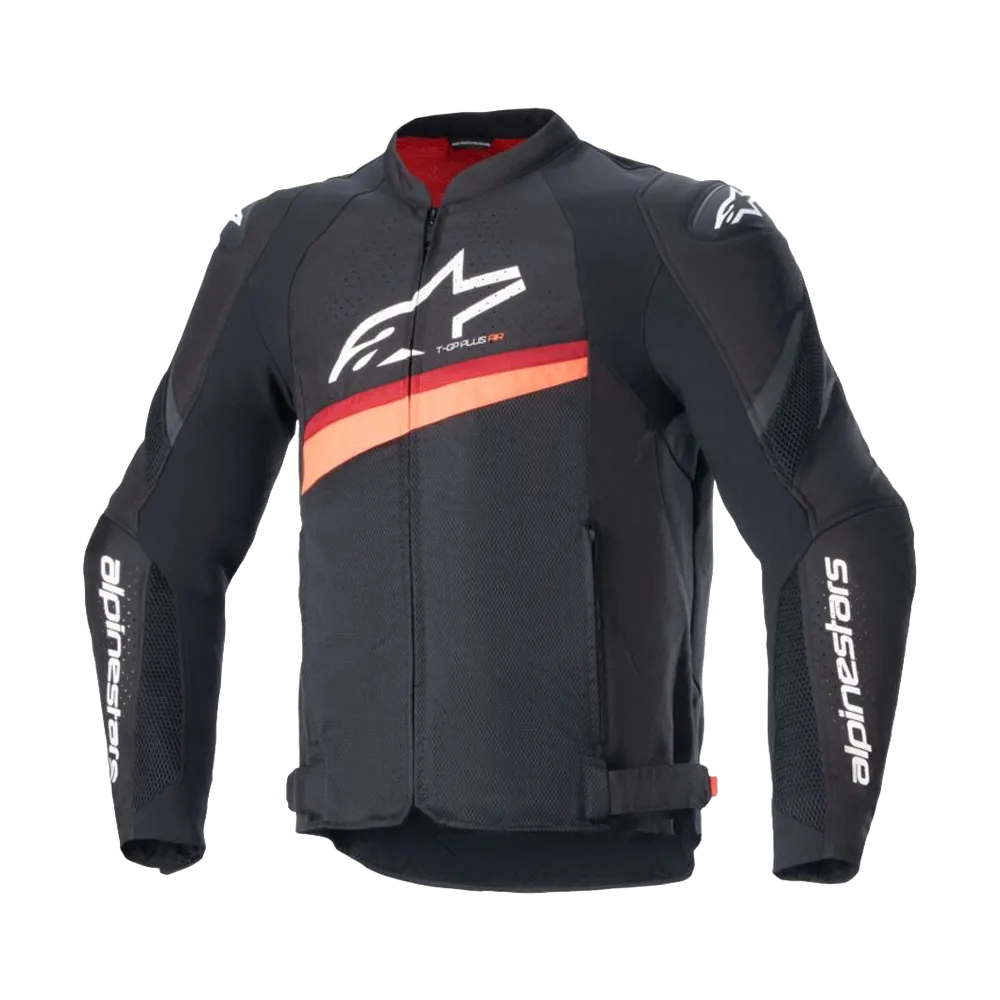
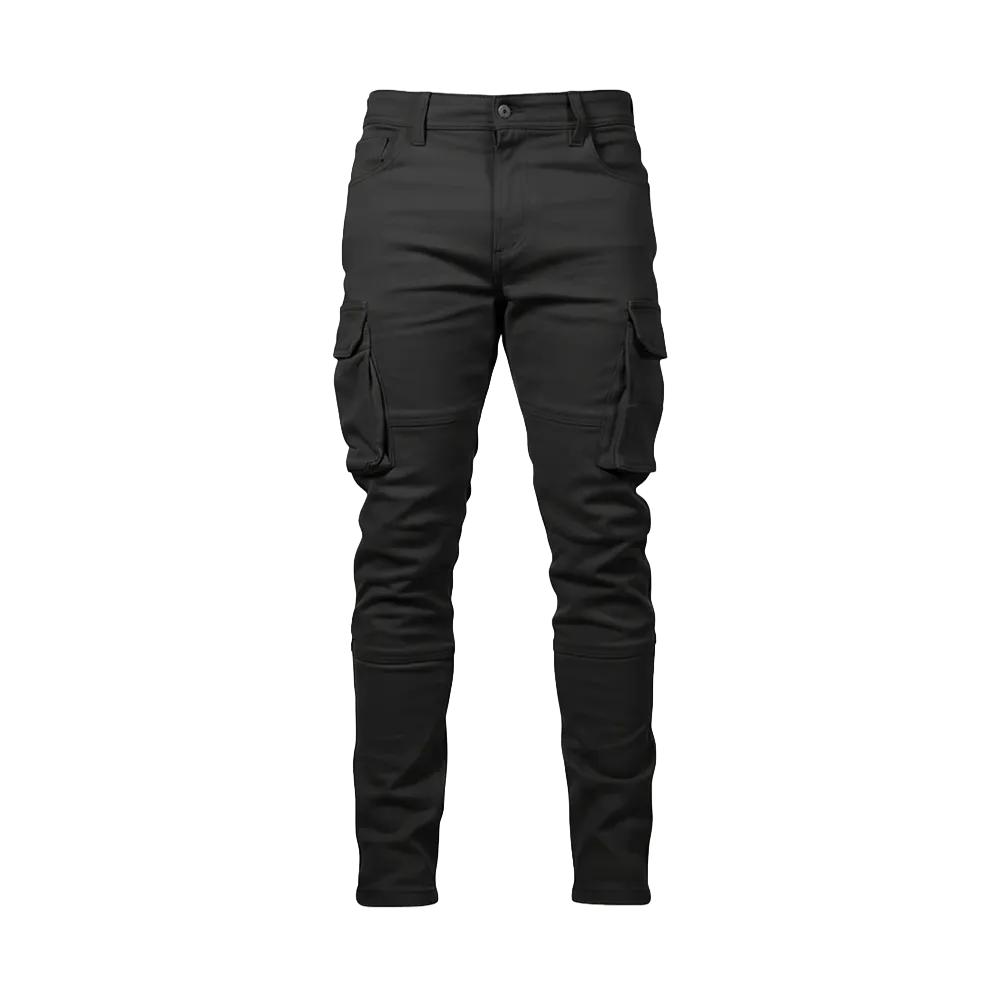
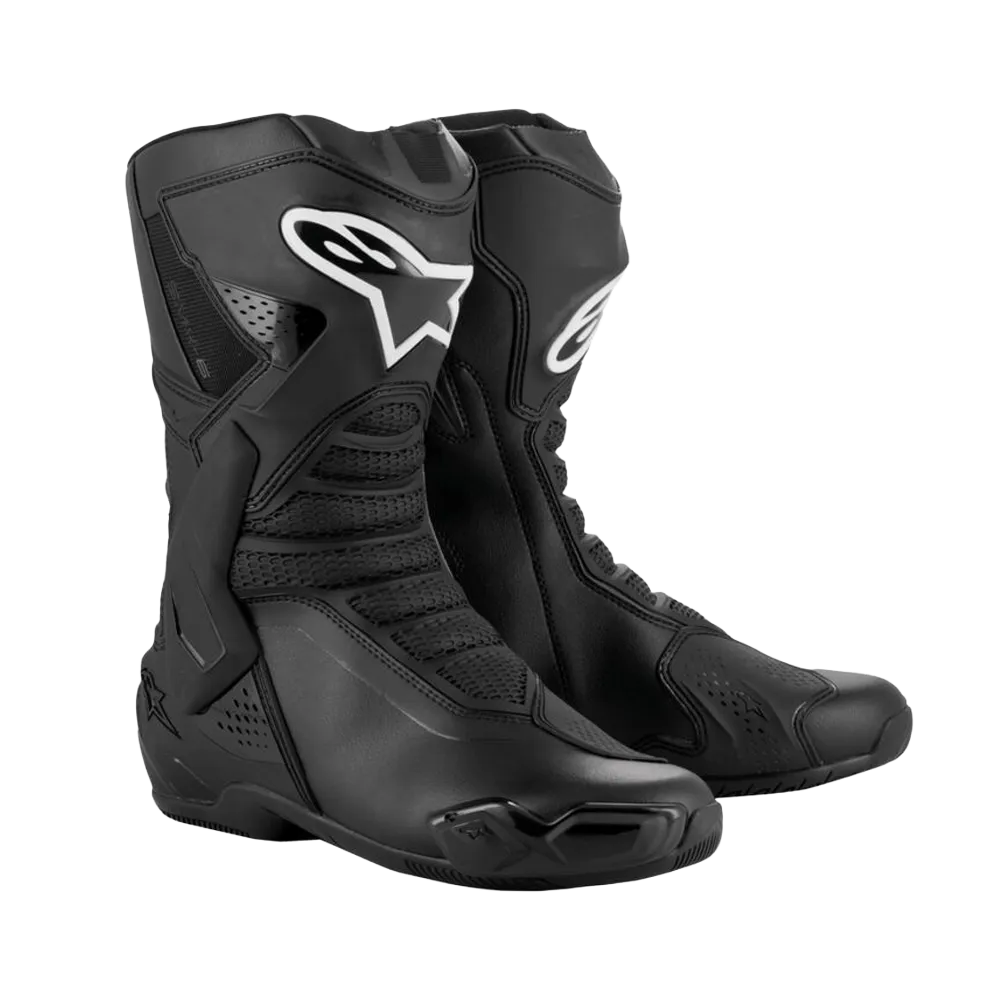
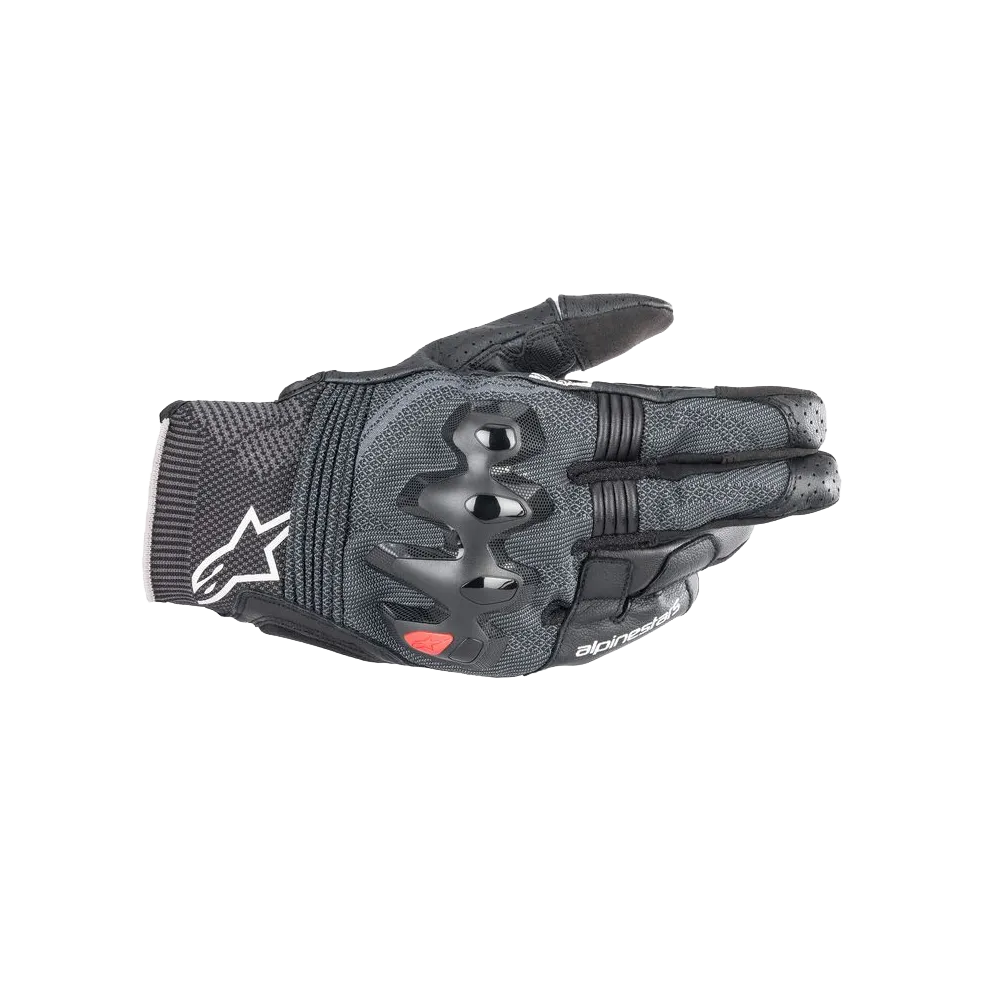
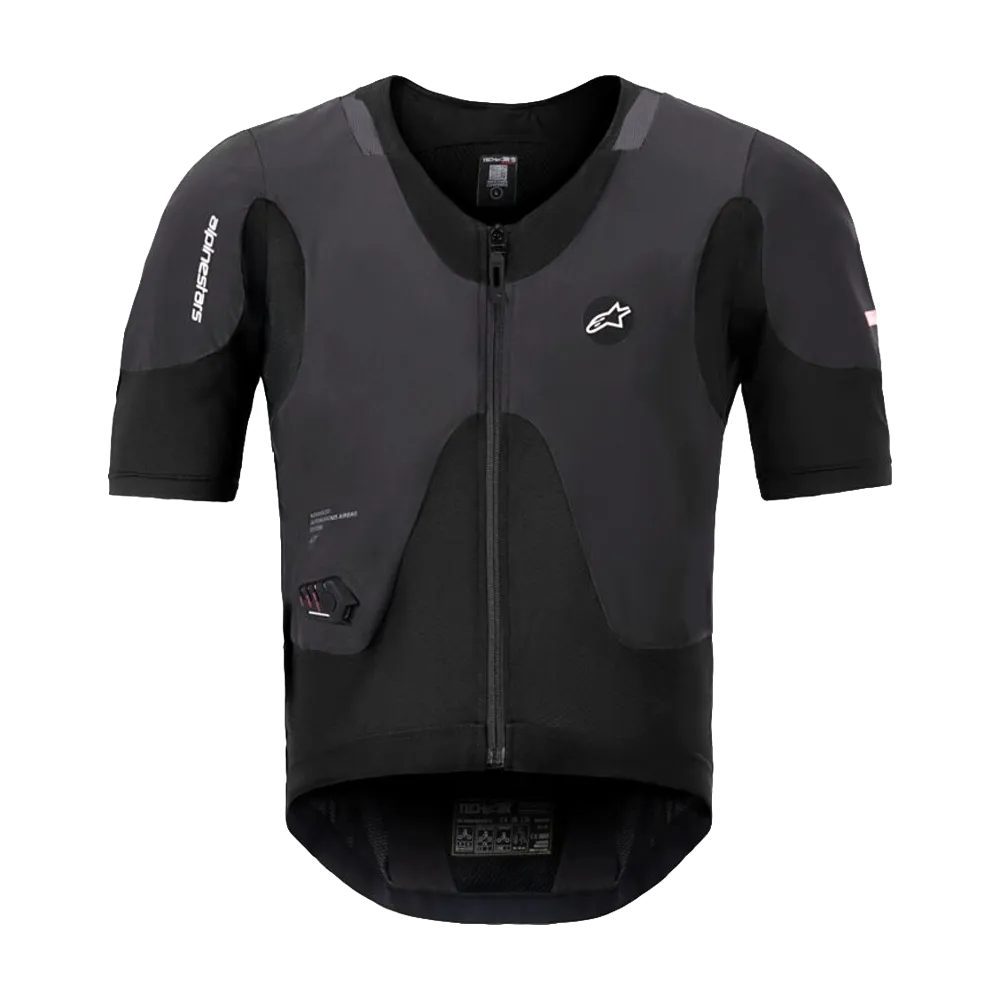
Gear from this ride